Commentary: I-270 Expansion Will Harm Latino Communities, Increase Air Pollution, and Accelerate Climate Change
Allen Cowgill: Expanding I-270 will increase pollution in neighborhoods inhabited mostly by people of color and could accelerate climate change by encouraging more people to drive.
This guest commentary is by Allen Cowgill, a Denver advocate focused on safer streets and sustainable transportation. He is a member of the Denver Bicycle Lobby and is on Twitter at @AllenCowgill.
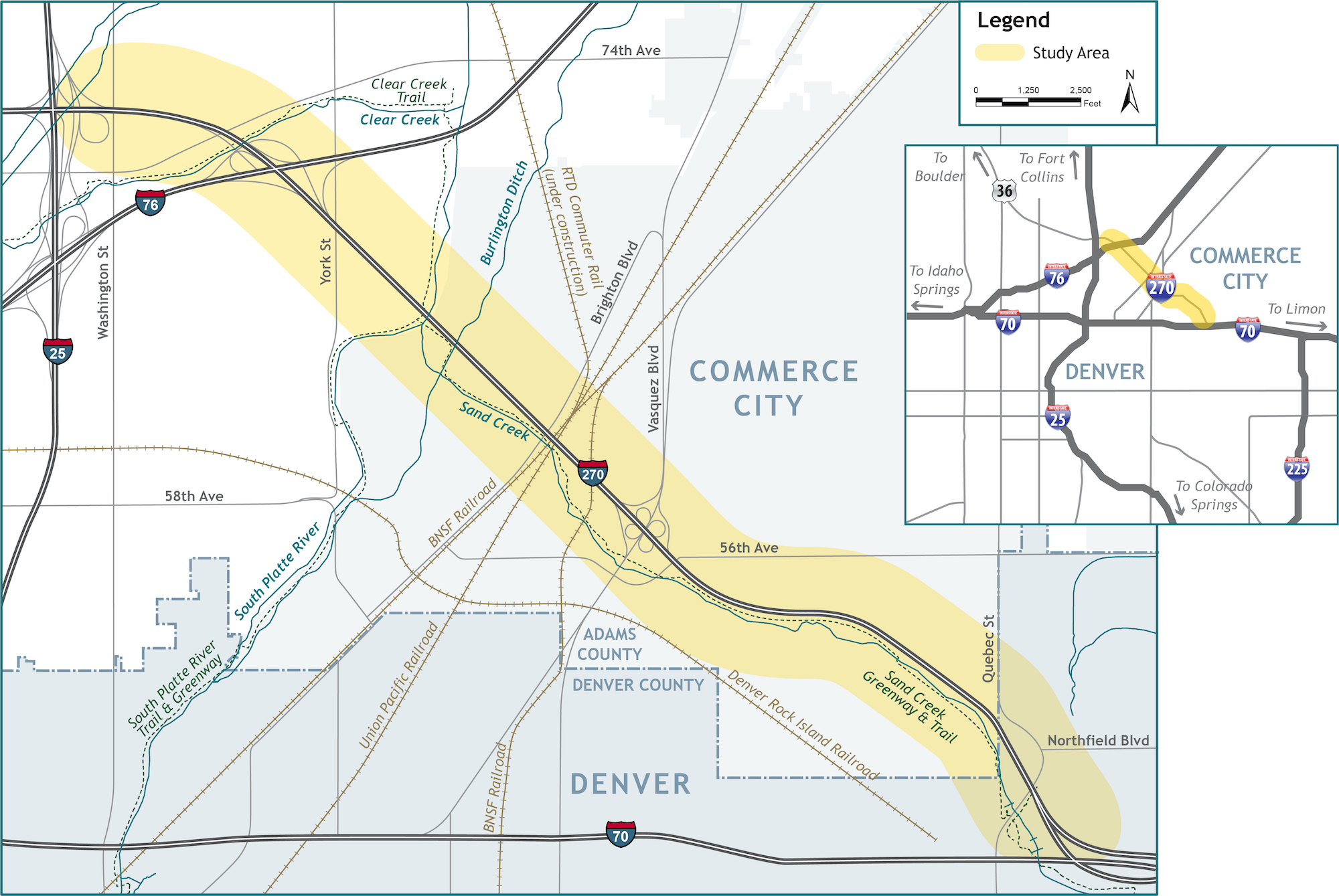
The Colorado Department of Transportation (CDOT) is planning to increase lanes for cars and trucks on I-270 and says this project is about “improvements and safety.” In reality, it will increase pollution in neighborhoods inhabited mostly by people of color and could accelerate climate change by encouraging more people to drive.
CDOT could rapidly increase safety by improving deadly state highways: Federal, Colfax, Colorado, Sheridan, Alameda, and other urban arterials are the deadliest streets in Denver. This isn’t just a Denver problem. From 2009 to 2016, U.S. arterial roads designed to move large volumes of traffic quickly saw a 67% increase in pedestrian fatalities.
What if we don’t change I-270? CDOT’s traffic projections (PPTX file) say travel times would increase by one to six minutes by the year 2040. The budget for this project, $400 million, seems like a ridiculous amount to lower travel times by just a few minutes. That money could be better spent elsewhere, like on Bus Rapid Transit on Federal or Colfax or on finishing the B-Line rail to Boulder.
We know that new lanes bring more traffic. With induced demand, it is only a matter of time before traffic volume returns. A California Air Resources Board report found that every 1 percent increase in urban highway capacity leads to a roughly 1 percent increase in vehicle travel. TREX, the Denver area’s massive interstate expansion on I-25, was a $1.2 billion project that took six years to complete, and it relieved congestion for only five years before traffic returned to pre-construction levels.
Source: Southwest Energy Efficiency Project, https://www.swenergy.org/how-to-improve-i-25-traffic-without-spending-big-bucks
People who live near this highway expansion will be disproportionately impacted, and those people are predominantly people of color. The students at Adams City High School, which serves neighborhoods surrounding I-270, are 87% Latino. The systematic racism that planned these highways through communities of color in the past is still alive and well as it expands highways through these communities today. The I-270 expansion will continue to burden communities already disproportionately impacted by poor air quality. (See: Suncor refinery)
These highway expansions are at odds with climate change mitigation, equity, and clean air. They are a waste of taxpayer dollars and will do little to reduce long-term congestion.
Streetsblog has migrated to a new comment system. New commenters can register directly in the comments section of any article. Returning commenters: your previous comments and display name have been preserved, but you'll need to reclaim your account by clicking "Forgot your password?" on the sign-in form, entering your email, and following the verification link to set a new password — this is required because passwords could not be carried over during the migration. For questions, contact tips@streetsblog.org.
This is the final post for Streetsblog Denver. The Denver Streets Partnership decided to end its operation of Streetsblog Denver as of January 31, 2022. Streetsblog USA assures us that all Streetsblog Denver content will remain online. To stay up to date on multimodal issues in Denver, please bookmark the Denver Streets Partnership blog — … Continued
The proposed Gray Street bike lane was quite possibly the perfect bike lane. Yet the original design died an unexpected and unfortunate bureaucratic death. Please don't let it be in vain.
Sidewalks are like relationships: We can build them if we are willing. We can repair them if we are willing. They don’t fall apart overnight. They need care, maintenance, and people choosing to do the work.
Since I founded Streetsblog Denver, the city’s media landscape has shifted, at least somewhat, to question automobile dominance and the general lack of good alternatives. Hell, one-time A-Line agitator Kyle Clark is now a hero of the movement.