CDOT Director Shailen Bhatt on Rising Traffic Deaths: Not Our Fault
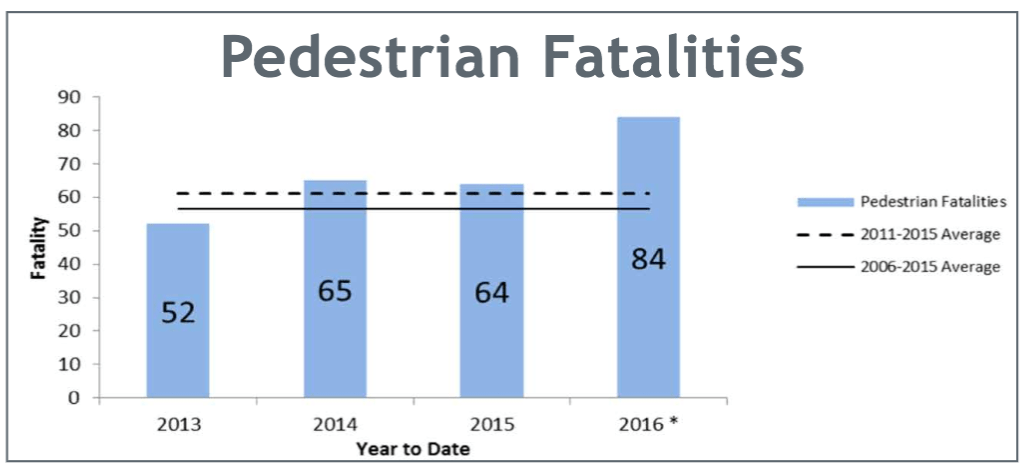
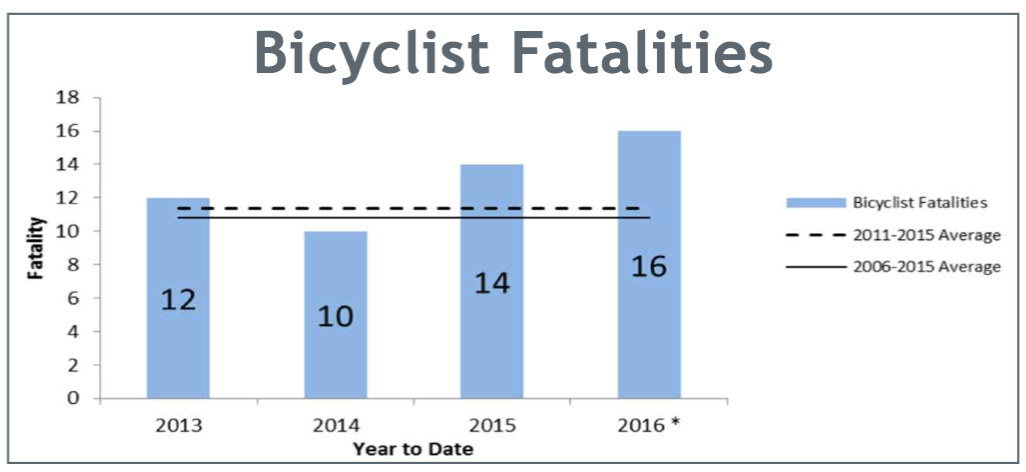
Traffic fatalities in Colorado have spiked 24 percent in two years, and pedestrian and cyclist deaths have reached a 15-year high. The rising death toll is an indictment of transportation policies that generate car traffic and promote high-speed driving on urban streets, but at a press conference yesterday, Colorado DOT chief Shailen Bhatt deflected responsibility from his agency, blaming distracted driving and society at large.
“We can engineer the system as well as we can,” said Bhatt. “But the behavioral stuff is not something that we can move the needle on drastically, except for our education programs.”
A total of 605 people died on Colorado streets and highways last year, including 100 who were walking or biking.
Traffic deaths are now more prevalent in urban areas than rural areas, according to CDOT data. Earlier this month a driver killed someone walking at the intersection of 14th and Federal, a busy car-centric crossroads where 25 lanes of traffic meet a bus transfer station, a light rail station, and a noisy construction site that will soon house CDOT’s headquarters.
But apparently CDOT is out of ideas.
Bhatt and Colorado State Patrol Chief Scott Hernandez did not offer any new solutions, save for the eventual deployment of unproven automated vehicle tech. They did “plead” with the public not to drive impaired, to wear seat belts, and to put down their phones while driving — good messages but nothing new at this point.
Bhatt acknowledged that driving speed is a top factor in traffic deaths. Yet when asked what CDOT would do to lower speeds on its urban arterial roads like Federal Boulevard, Colfax Avenue, and Colorado Boulevard — where 16 pedestrians and bicyclists lost their lives in the last two years — Bhatt said the agency has to “balance” safety with moving cars and trucks.
“I think the challenge is, we, as a society, have decided that we want to move a lot of cars on these arterials,” Bhatt said. “And if I went out unilaterally and said, ‘Every arterial that I just mentioned is gonna be 35 mph…’ we would see a reduction in some of those crashes. But we would create another problem set. So that’s why I believe we’re trying to find a balance between where we can do things to make the roads safer and move traffic.”

When Bhatt referred to potential street design changes, he said, “We’ve kind of seen the limit of taking dangerous intersections out and putting in grade-separated crossings or adding clear zones.” But Denver’s urban surface highways don’t need grade-separated crossings. They need standard urban street infrastructure like sidewalks and crossings that prioritize pedestrian safety. If that means car traffic doesn’t move as fast, so be it. People’s lives would be saved, and that’s more valuable than a few seconds of travel time.
Bhatt’s agency is actually undermining safety with its current projects in Denver. While people die on the city’s extra-wide, high-speed streets, CDOT and Denver Public Works are making Federal Boulevard even wider, encouraging more speeding and creating a more hostile environment for pedestrians. Both agencies ignored concerns about pedestrian safety to push the project through.
Instead of taking the initiative to change department policy and prevent the loss of life, Bhatt is sticking with billboards and marketing campaigns. Sure, they haven’t worked before, but hey, maybe this year will be different.
Streetsblog has migrated to a new comment system. New commenters can register directly in the comments section of any article. Returning commenters: your previous comments and display name have been preserved, but you'll need to reclaim your account by clicking "Forgot your password?" on the sign-in form, entering your email, and following the verification link to set a new password — this is required because passwords could not be carried over during the migration. For questions, contact tips@streetsblog.org.