Despite What You May Have Heard, the Car Is Still King in Denver
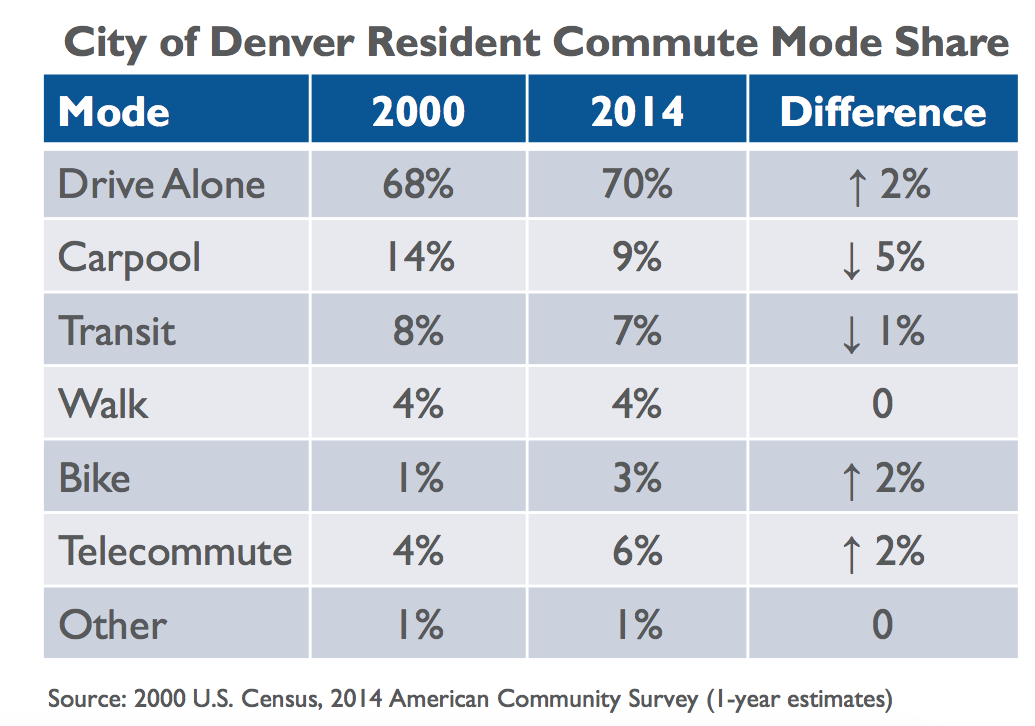
The Mile High City has the internet bursting at the servers with superlatives about its unmatched quality of life — brought to you, in part, by a supposedly superb transit system. But the data tells another story.
In 2002 the city set out to shape Denver’s neighborhoods with Blueprint Denver, a planning document that tried to dictate what kind of development happened where. Land use has a huge impact on transportation and how people get around, and planners aimed to “improve the function of streets to move more people in more ways.” In other words, more transit and biking.
While cycling has increased, the same can’t be said for transit commuting. The car is still king — and by some measures even more so than when Blueprint Denver came out.
A bigger share of people drive to work solo now than in 2000. According to the Census, about 73 percent of commuters drive alone, up from 68 percent 16 years ago. Meanwhile, the rate of transit commuting has fallen. In 2000, 8 percent of Denver commuters took trains or buses to work. Now only about 6 percent do.
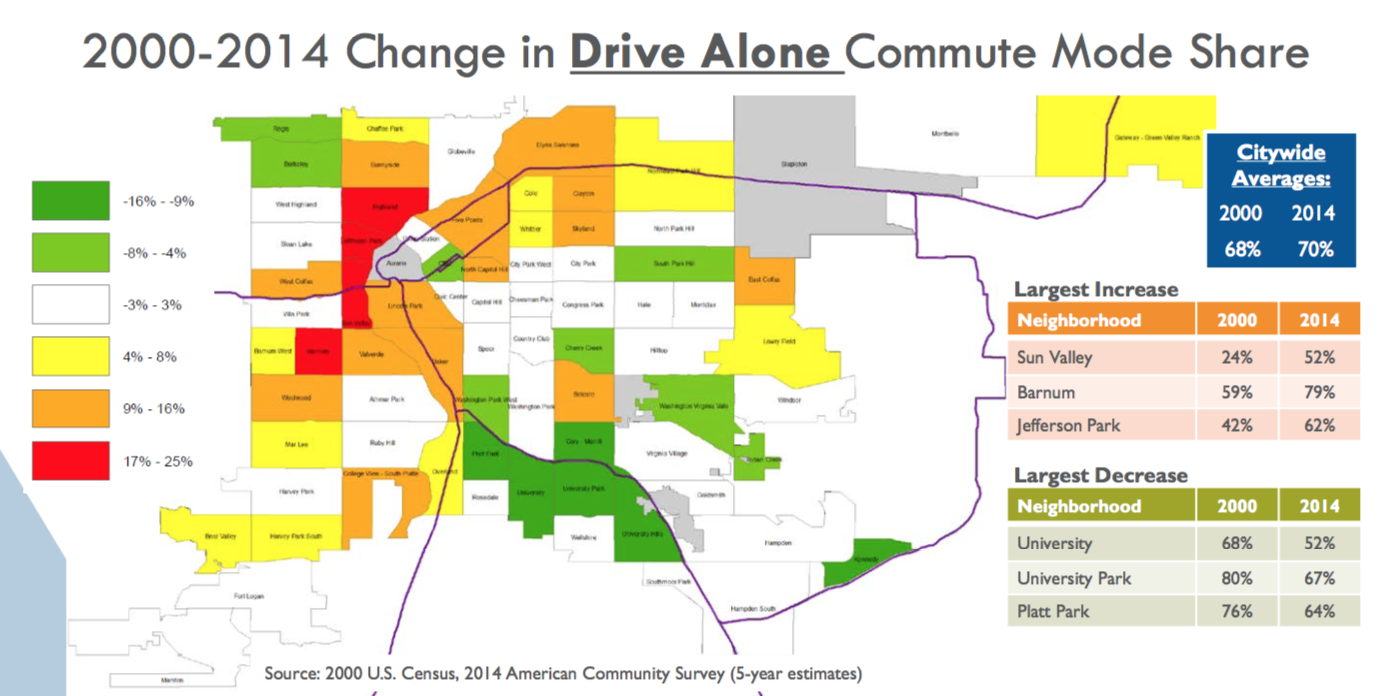
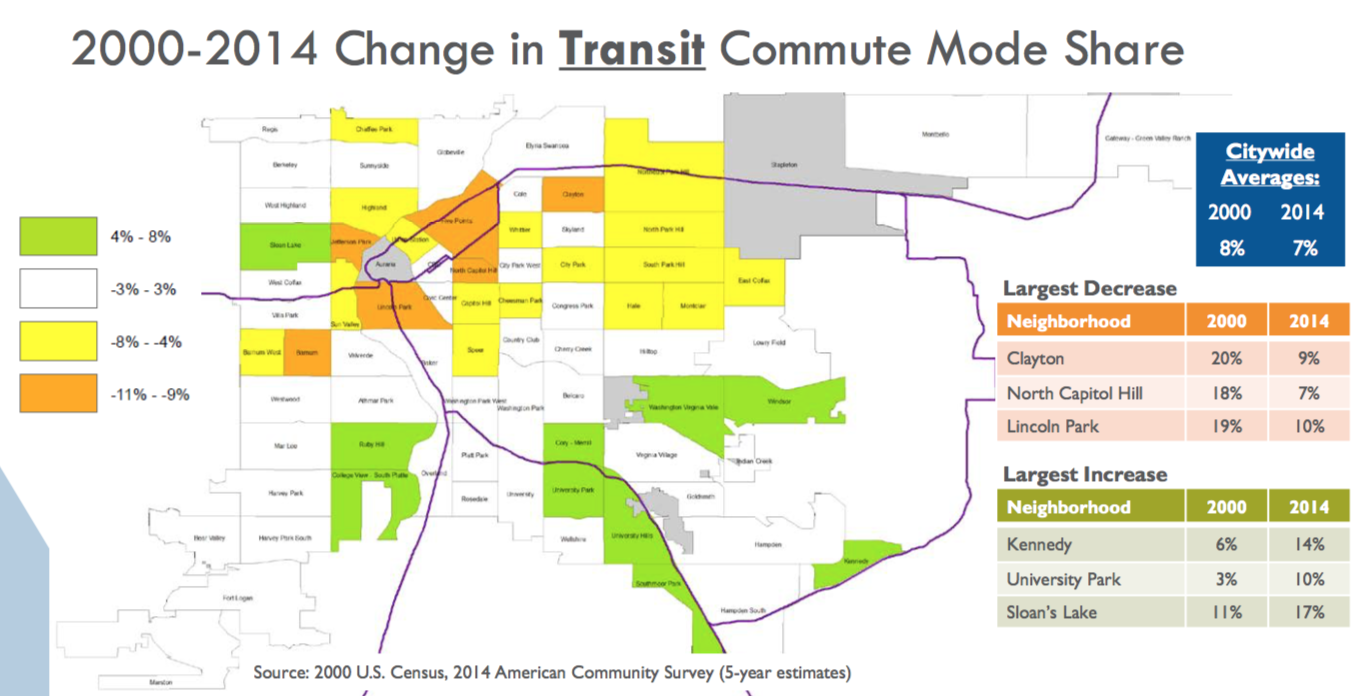
The drop in transit commuting isn’t too surprising given that high-frequency service doesn’t reach 70 percent of Denverites. Recent investments in FasTracks revolve around suburban commuting, not the city itself.
Still, some Denver areas have seen an increase in transit commuting, according to a recent presentation at a Denveright meeting. It’s no coincidence that most of those neighborhoods are on the outer ring of the city and have benefited from investment in rail. University Hills, Southmoor, and South Platte, for example, are along rail lines that arrive every 10 minutes during rush hour. They each saw an increase in transit commuting.
The data comes from an October meeting where city planners and residents with expertise in transportation, development, business, and neighborhood organizing worked on updating Blueprint Denver.
Keep in mind: These stats are about getting to and from work, not trips to places like school or the grocery store. But they indicate that Denver has failed to act with sufficient boldness to achieve its transportation goals. If we’re going to build a transit network that people can use for all types of trips, that has to change.
Streetsblog has migrated to a new comment system. New commenters can register directly in the comments section of any article. Returning commenters: your previous comments and display name have been preserved, but you'll need to reclaim your account by clicking "Forgot your password?" on the sign-in form, entering your email, and following the verification link to set a new password — this is required because passwords could not be carried over during the migration. For questions, contact tips@streetsblog.org.