Advocates Request Injunction Against CDOT’s I-70 Boondoggle
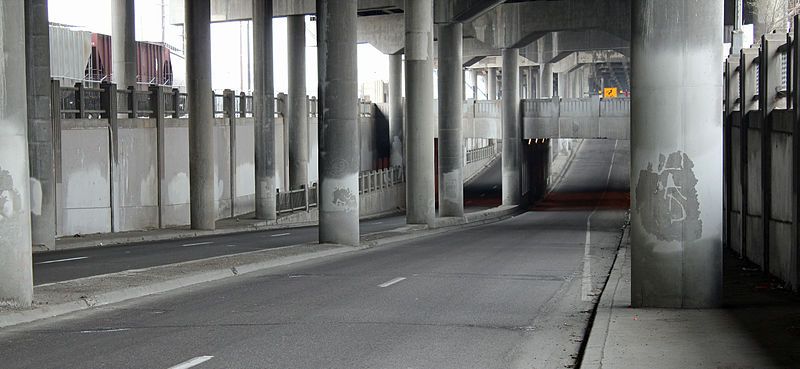
The Colorado Department of Transportation should not be allowed to widen I-70 before the courts have ruled on the project, say advocates fighting the highway expansion, and they have a new piece of evidence to bolster their legal case.
CDOT wants to start digging a wider I-70 freeway through north Denver neighborhoods early next year, but there’s still a pending court case arguing that the Federal Highway Administration violated the National Environmental Policy Act when it approved the project. The crux of the claim against the project is that the feds improperly approved a CDOT environmental impact analysis that failed to include a drainage project tied to the highway widening.
On Friday, attorney Aaron Goldhamer requested an injunction against the highway widening in federal court on behalf of developer Kyle Zeppelin and other residents fighting the project. The highway opponents have acquired an internal memo from Denver Public Works that they think is strong enough to demonstrate that their case should get a full hearing before CDOT is allowed to start construction.
In seeking an injunction in the U.S. District Court for Colorado, Goldhamer cited the 2014 “Montclair Creek Drainage Feasibility Evaluation” [PDF], a Denver Public Works report marked for internal use only that sparked the creation of the “Platte to Park Hill” drainage plan under scrutiny today.
There are two main takeaways from the memo: CDOT needs drainage work done to protect the sunken highway from flooding, and CDOT did not want to include drainage work in its environmental impact analysis.
“The court might not get to the merits of the case until after CDOT started digging,” Goldhamer said. “We’re saying, ‘Look, we’ve got some good arguments here. Here’s a little peek at the argument, and you should prevent them from going forward based on this preliminary showing.'”
CDOT and city officials have argued that the flood protection project is separate from the highway expansion project, even though the sunken I-70 ditch will affect the city’s drainage work, and the Hancock administration and CDOT reached an agreement to pay for both projects together.
The memo Goldhamer submitted includes compelling evidence that the two projects are inseparable. “As part of the [I-70] project, CDOT proposes to build a 100-year storm pipe system to protect this depressed section of highway from stormwater flows,” the document states.
Another passage relays why the agency avoided changing its environmental impact statement to include drainage work:
CDOT’s I-70 Partially Covered Lowering (PCL) Project Manager, Keith Stefanik has confirmed from his management team that CDOT cannot include any of the Montclair Creek open channel projects in their design/build contract for the I-70 PCL project. To amend their Environmental Impact Study (EIS) to include an open channel option is such a large change in scope that they would have to start their NEPA EIS process essentially all over again. It has taken them two years to get to the point of where they are ready to submit their supplemental package, and they are unwilling to jeopardize their progress on the EIS for the I-70 PCL.
The district court is expected to rule on the injunction request by the end of the year.
Other legal challenges to CDOT’s urban highway expansion project remain active as well. And in addition to litigation, Denver’s largest community group recently called on Governor John Hickenlooper and Mayor Michael Hancock to halt the project.
This article was updated to clarify the the intent of the Montclair Creek drainage document.
Streetsblog has migrated to a new comment system. New commenters can register directly in the comments section of any article. Returning commenters: your previous comments and display name have been preserved, but you'll need to reclaim your account by clicking "Forgot your password?" on the sign-in form, entering your email, and following the verification link to set a new password — this is required because passwords could not be carried over during the migration. For questions, contact tips@streetsblog.org.