Get Ready for More Traffic as CDOT Plows Ahead With I-70 Expansion
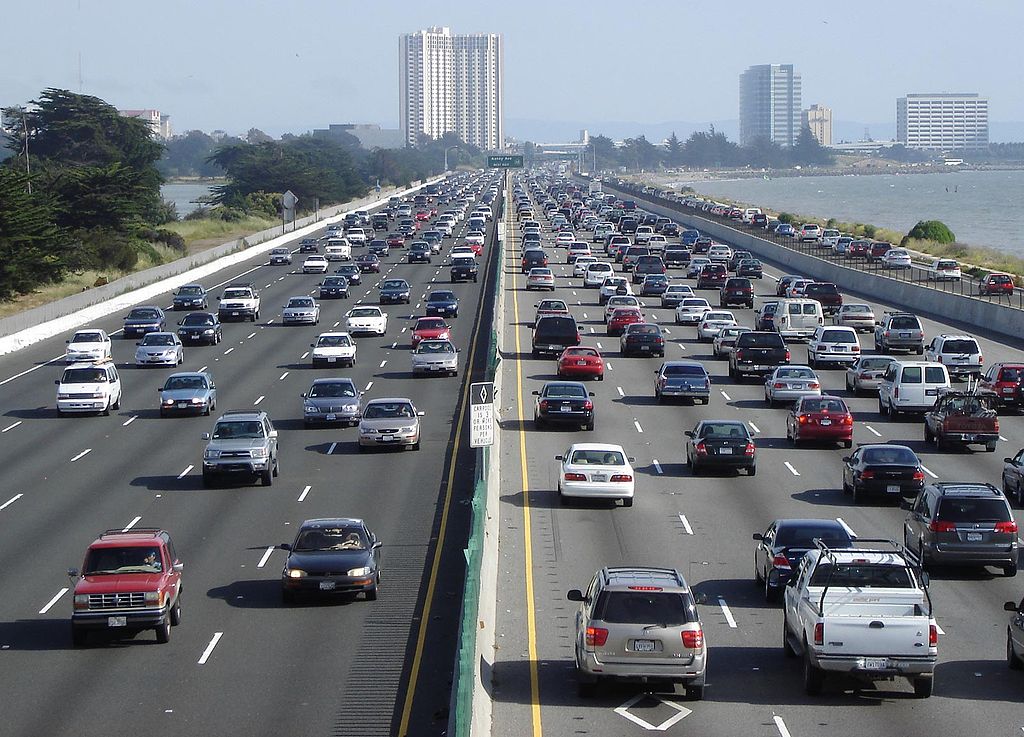
There are plenty of reasons why the scheme to widen I-70 in north Denver is subject to so much scrutiny: It’s going to cause more traffic, relocate 74 homes and businesses, pollute some of the city’s poorest neighborhoods, and cost between $1 billion and $2 billion to build.
Oh, and Colorado DOT used questionable traffic projections to justify the project.
In addition to the neighborhood backlash, the I-70 project has undergone so much scrutiny because it’s the law — the feds require local agencies to assess the impact of major transportation projects on their surroundings. But the process is long and complex, and often seems like a rote exercise rather than a means to fix bad ideas.
CDOT just published the final version of its I-70 impact statement, and it’s easy to see why the process breeds cynicism. Nothing much has changed. I-70 will get wider, at first going from eight lanes to 10 on one stretch, and from six lanes to eight on others. Colorado DOT plans to add two more lanes in the future. More traffic and more pollution is coming.
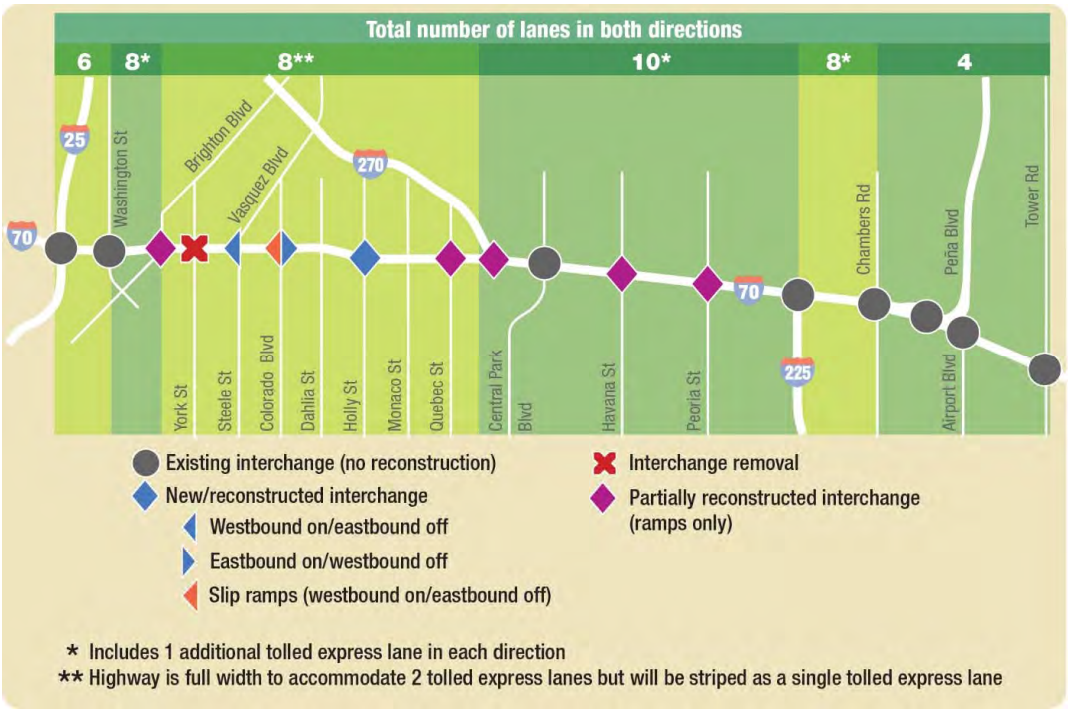
In the end, I-70’s lane totals will look like this:
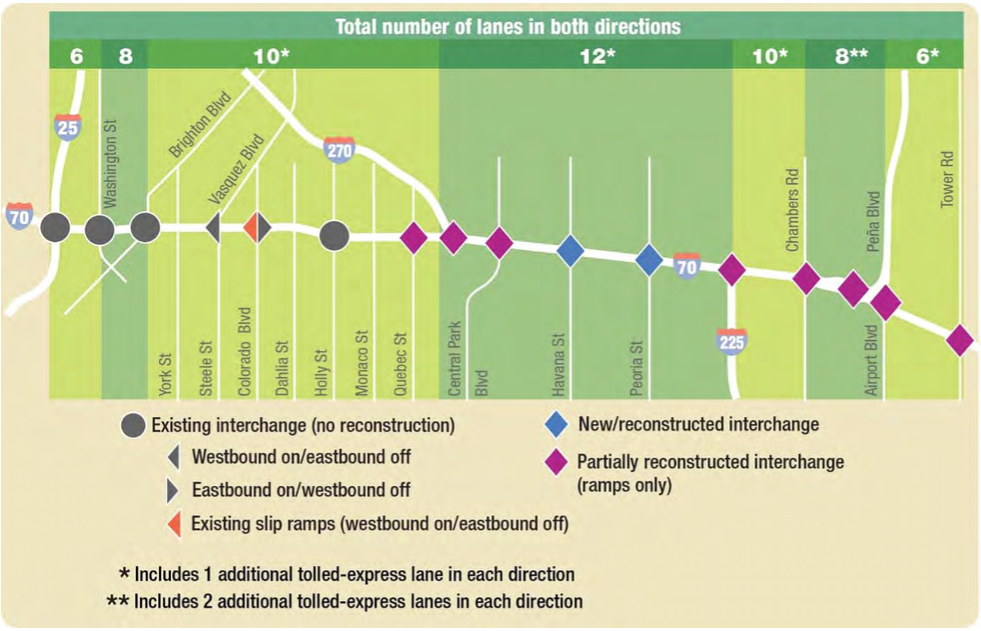
The new lanes will be “tolled express lanes,” according to the report. Colorado DOT might allow vehicles with three or more people to use them for free.
The release of the CDOT impact statement is close to the last step before implementation. Starting Friday, the public can comment on the document for one month, plus Colorado DOT will hold some public hearings. After that, the project will either be legally permitted or it won’t. Lawsuits could also come into play and delay construction.
The review process isn’t going to stop this project, but it does shed light on the huge mismatch between the problems the public identified and CDOT’s response. Over and over in its report, CDOT says it has “adequately addressed” concerns about the I-70 widening. Streetsblog has been digging through the document and we’ll be running a series of follow-up posts so you can decide for yourself if the agency’s responses are up to snuff. Stay tuned.
Streetsblog has migrated to a new comment system. New commenters can register directly in the comments section of any article. Returning commenters: your previous comments and display name have been preserved, but you'll need to reclaim your account by clicking "Forgot your password?" on the sign-in form, entering your email, and following the verification link to set a new password — this is required because passwords could not be carried over during the migration. For questions, contact tips@streetsblog.org.