A Model to Keep Homes Near Transit Affordable
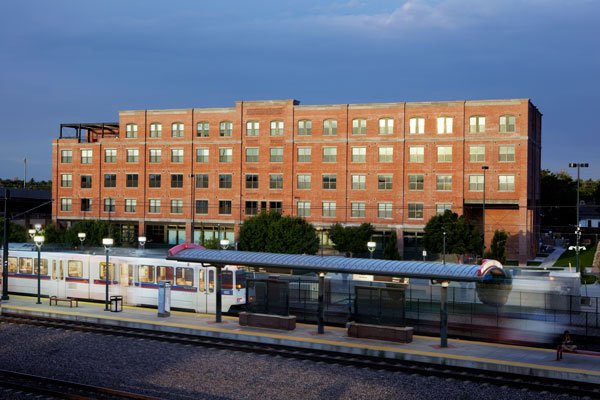
The Hancock administration’s redevelopment of the National Western Center means massive change for an industrial corner of Elyria Swansea. The area around 48th and Race will gain an RTD station along the N-Line and a bunch of new development — including homes, businesses, and a health center — and lose much of the warehouses and surface parking lots that define it today.
People want the convenience of living near transit. But housing is in short supply in Denver, and that applies to the areas near transit stations, where people are willing to pay a premium. Will the new transit-oriented development be affordable to Denverites on the lower half of the income spectrum? About half of them will be, thanks to the non-profit Urban Land Conservancy, which develops land explicitly to protect against displacement and gentrification, and “preserve community assets for future generations.”
ULC buys land and partners with developers to create new places when the time is ripe. In 2015, ULC bought the industrial site at 48th and Race for $5.5 million with help from the Calvert Foundation and a loan from the Denver Office of Economic Development. When the RTD station and 560 condos and rental homes come online, at least 51 percent of the new residential units have to be reserved for households making 80 percent or less of the area median income. Right now that means households making no more than $56,000 annually.
ULC awarded Zocalo the rights to develop 48th and Race, which will include market-rate homes that make the project profitable.
Rather than traditional subsidized housing that doesn’t remain affordable once deed restrictions or housing vouchers expire, ULC’s model builds long-term affordable housing stock. The model is not new, but neither is it mainstream, says Tony Pickett, ULC vice president of master site development.
“One of the biggest problems in Denver and any other major city is traditional affordable housing that’s been subsidized, it only lasts for a finite period, like 15 or 30 years, and then it expires,” Pickett said. “There’s more affordable housing that’s expiring than we can create new. So even when we’re creating new units, we’re still losing [affordable housing].”
If someone buys an affordable unit and later decides to sell, the next buyer also has to make 80 percent of less of the area median income, and there are limits on the sales price (ULC is still working on this formula). Even some in the nonprofit development cringe over this aspect, Pickett said, because home ownership can be a vehicle for wealth. But this model of home ownership can still be a stepping stone out of poverty, according to data from the Champlain Housing Trust, a similar development in Burlington, Vermont. Out of 340 shared equity home sales, 55 percent of the sellers went on to buy a market-rate home.
One development will not fix Denver’s housing shortage, but this model can make a difference. The 48th and Race site is one of many ULC transit-oriented development projects, including developments near Blake Street Station, Evans Station, and 40th and Colorado Station.
Streetsblog has migrated to a new comment system. New commenters can register directly in the comments section of any article. Returning commenters: your previous comments and display name have been preserved, but you'll need to reclaim your account by clicking "Forgot your password?" on the sign-in form, entering your email, and following the verification link to set a new password — this is required because passwords could not be carried over during the migration. For questions, contact tips@streetsblog.org.