Transit Raises Property Values, Lowers Poverty
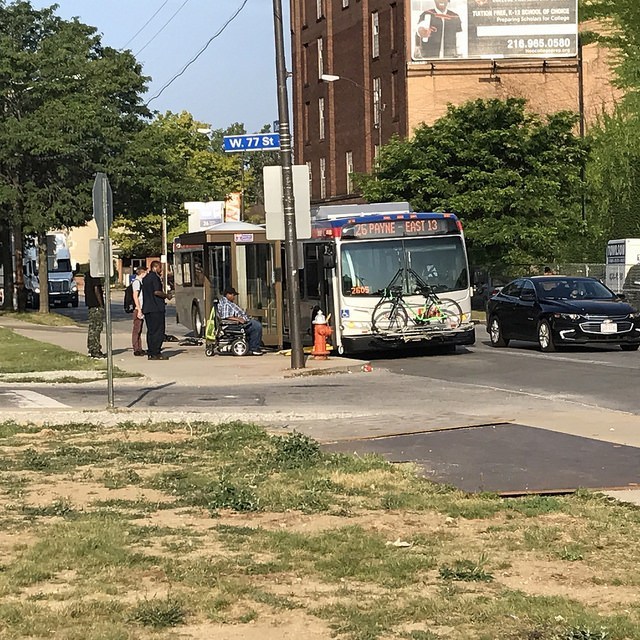
Neighborhoods with transit access enjoy higher property values and lower poverty rates, according to a new studyby researchers at Cleveland State University.
The study isolated neighborhoods in Cleveland that gained transit access after previously lacking it, using statistical modeling to control for other factors. The research team found that neighborhoods that gained access to transit saw property values rise by 3.5 percent and poverty rates fall by almost 13 percent after 10 years. Those neighborhoods saw overall employment climb 3.5 percent.
“RTA is fantastic investment for taxpayers,” said Obed Pasha, an assistant professor at Cleveland State and one of the studies authors. “Not only does it help lift people out of poverty, it helps revitalize neighborhoods.”
Greater Cleveland Regional Transit Authority spends about $182 million annually in Cuyahoga County. Between commuting, rides to medical appointments, trips to school and consumer shopping trips, the study estimated the agency returns about $321 million annually in economic activity, the study estimated. That includes $23 million in annual savings for the Cleveland Municipal School District.
In addition, the study estimates the agency creates about 2,900 jobs for the region, through direct employment within the agency and boost in employment at local businesses that benefit from RTA service.
Transportation is a big obstacle for low-income workers in Cleveland. The region has a serious “spatial mismatch” problem, where entry-level jobs are located far away — in exurbs — from urban neighborhoods with high unemployment, the report notes.

Meanwhile, Greater Cleveland Regional Transit Authority has been struggling with budget shortfalls, and was forced to raise fares and reduce service in recent years — a pattern known to transit advocates as a “transit death spiral.” But local officials have declinedto introduce a tax measure that could help the struggling agency.
Streetsblog has migrated to a new comment system. New commenters can register directly in the comments section of any article. Returning commenters: your previous comments and display name have been preserved, but you'll need to reclaim your account by clicking "Forgot your password?" on the sign-in form, entering your email, and following the verification link to set a new password — this is required because passwords could not be carried over during the migration. For questions, contact tips@streetsblog.org.