Engineers to Pedestrians: No ‘Walk’ Signs for You!
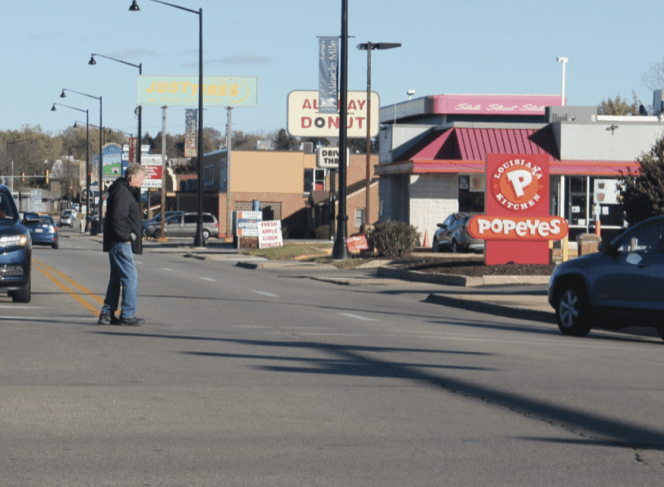
Pedestrians won’t get “Walk” signals at thousands of intersections thanks to a decision by a powerful group of engineers in Washington on Thursday.
The National Committee on Uniform Traffic Control Devices — which establishes rules for road signs, signals and markings — opted to not require the “signal heads” for pedestrians — signs that display the “walk” or “don’t walk” signal — at every intersection, despite pressure from an insurgent group of progressive engineers.
“Engineers may continue to not install pedestrian signal heads … this is our transportation profession,” engineering consultant Bill Schultheiss, one of the insurgents, tweeted after the ruling.
And in the end, the @ncutcddecided against changing the #MUTCD. Vote gets majority, but fails to get 2/3 majority to pass.
Engineers may continue to not install pedestrian signal heads….this our transportation profession. #Ethicshttps://t.co/8fc3QDkvRJ
— Bill Schultheiss (@schlthss) January 10, 2019
Some of the engineers on the committee were worried about the cost, Schultheiss said, which range from $5,000 to $50,000, if the rule change made transportation agencies feel they needed to install crosswalks, sidewalks and curb ramps as well. In some cases, the signal heads may have required a little bit of utility work as well.
Opponents said they were concerned about requiring those things in rural areas where there weren’t many pedestrians.
As we recently reported, based on research in suburban Rockford, Ill., intersections in rural and suburban areas need more protection. And even a few pedestrians per day adds up to repeated exposure that results in needlessly lost lives.
Of course when we discuss cost of infrastructure we are making policy decisions and value judgments regarding who is important and who’s life has value.
Our design decisions are *social engineering* the behavior of society https://t.co/0UKUDLypvW
— Bill Schultheiss (@schlthss) January 10, 2019
The NCUTCD’s decision comes at a time when pedestrian deaths are on the rise. About 6,000 people were killed while walking last year, a nearly 50-percent increase over the last five years.
“The committee not passing requirement to provide pedestrian signal when installing new traffic signal is very disappointing,” Dongho Chang, Seattle’s lead traffic engineer and one of the engineers who pushed for the change, told Streetsblog in an email. “We’ll continue to work with members that have concerns to change their perspectives.”
If the changes would have been approved they would have become part of the Manual on Uniform Traffic Control Devices, which is used as a guideline on every road project in America. NCUTCD said it is not sure when the next edition of the manual will be published.
Streetsblog has migrated to a new comment system. New commenters can register directly in the comments section of any article. Returning commenters: your previous comments and display name have been preserved, but you'll need to reclaim your account by clicking "Forgot your password?" on the sign-in form, entering your email, and following the verification link to set a new password — this is required because passwords could not be carried over during the migration. For questions, contact tips@streetsblog.org.