RTD Loses Millions on Parking Because State Legislators Wanted It That Way
Building and running parking lots is a bad way for transit agencies to spend money — giving those parking spaces away for free is even worse. But that’s exactly what RTD is required to do by state law [PDF].
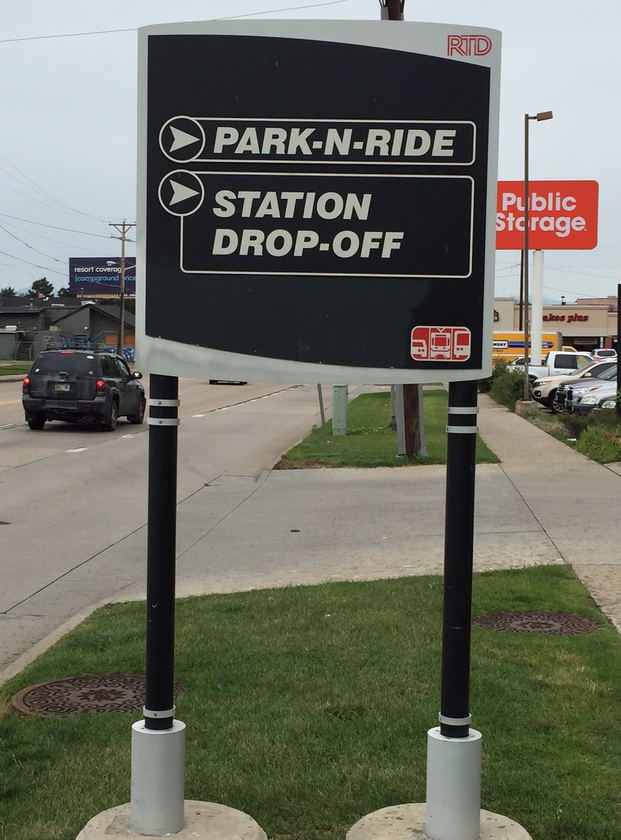
If RTD charged drivers just $1.50 per day, the agency would raise an extra $8.2 million a year, according to the Colorado Fiscal Institute. Instead, Denver’s only transit agency spends millions to build and operate its parking facilities without charging for most spaces.
Why? In 2006, after FasTracks was approved by voters. State Senator Ron Tupa, of Boulder, introduced legislation forbidding RTD to charge residents for parking. He didn’t think transit riders should have to “pay twice.”
But transit riders do pay for those subsidized parking spots. They pay in the form of worse bus and train service as agency resources get tied up in parking construction and operation instead.
Each parking space in a garage costs about $20,000 to build, RTD Board Member Claudia Folska told the Denver Post. Of the agency’s 77 park-and-rides, 36 are free all the time, for everyone. The other 41 are free for in-district residents for the first 24 hours, cost $2 per day after that, and cost just $4 for people who live outside the station’s district.
The cheaper and more abundant parking is, the more likely a rider will drive solo to access the train station instead of walking, biking, taking the bus, or carpooling, according to the American Public Transportation Association. By mandating free parking, the legislature actually encouraged car traffic.
RTD isn’t blameless here. The agency wasn’t required to build so much parking by rail stops and doesn’t have to market its stations along the A-Line to Denver International Airport as a cheap place to store cars while out of town. There is no law that ties the agency’s hands and prevents it from developing or selling land by rail stops (though for federally-funded projects, the agency would have to show that ridership would not take a hit as a result).
But it’s clear that the legislature has made the situation worse. The attempt to help people save money on parking actually shifted costs to transit riders who can least afford it.
This article was changed to reflect the correct parking fees for out of district residents at some stations.
Streetsblog has migrated to a new comment system. New commenters can register directly in the comments section of any article. Returning commenters: your previous comments and display name have been preserved, but you'll need to reclaim your account by clicking "Forgot your password?" on the sign-in form, entering your email, and following the verification link to set a new password — this is required because passwords could not be carried over during the migration. For questions, contact tips@streetsblog.org.