Low-Income Denverites Want Safe Streets Most, Have Least Access to Them
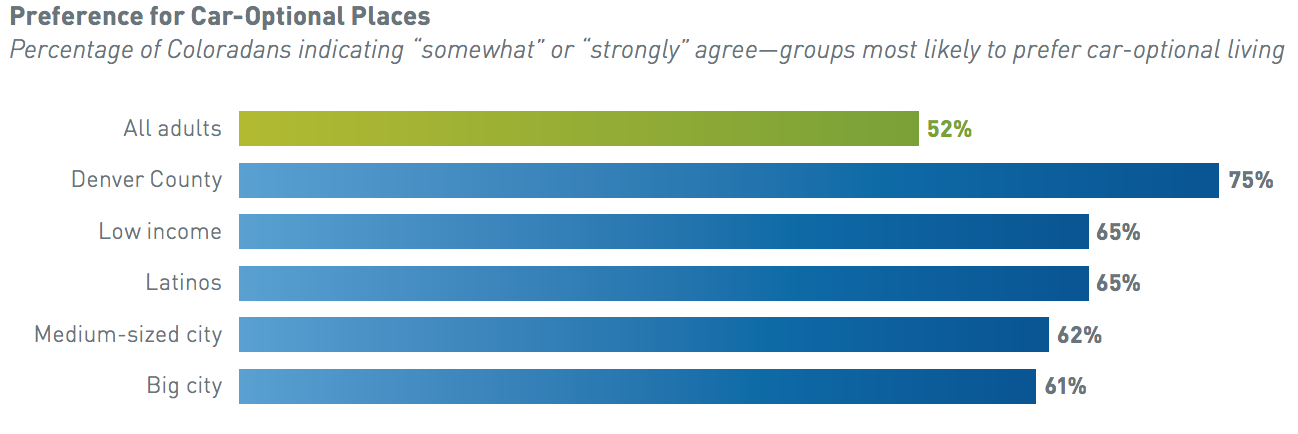
The vast majority of Denverites would rather not depend on a car, but walking, biking, and transit infrastructure leave them wanting. That’s according to a study [PDF] released Friday by the Urban Land Institute called “Colorado in 2015,” which also found that low-income and Latino Coloradans are the least satisfied with the safety of walking and biking in their neighborhoods, even though they depend on car-free transportation the most.
From the report:
Many low-income Coloradans find the neighborhoods where they live lacking in important ways. They are less satisfied with the quality of life in their communities and with the range of housing available to them, more likely to say that their neighborhood lacks outdoor recreation space, and more likely to say that crime and traffic make it unsafe to walk.
One-fifth (19 percent) of Coloradans says that traffic in their communities makes it unsafe to walk. Three in ten Latinos (30 percent) and those with incomes of less than $25,000 (28 percent) find it unsafe to walk in their neighborhoods because of traffic.
More than half of Coloradans — 58 percent — called walkable neighborhoods, with sidewalks, crosswalks, and other pedestrian-friendly features, a top or high priority. The study found that families making less than $50,000 a year — about 37 percent of Denver’s families, or 51,000 households, according to the American Community Survey — were more likely than people in other income brackets to categorize walkability as important.

Here are some more findings from ULI’s report:
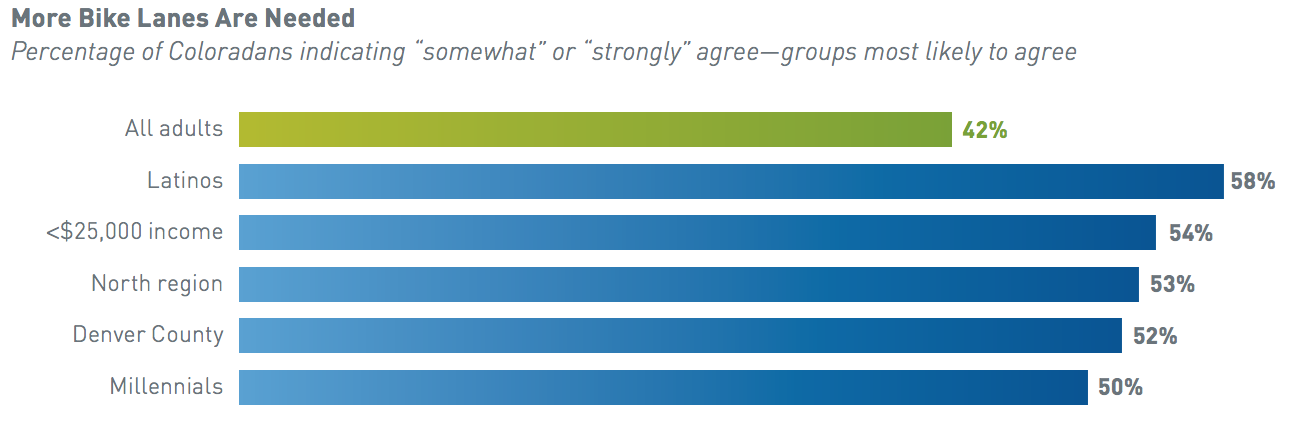
Low-income residents, Latinos, Millennials, and people who live in Denver County are more likely than other Coloradans to report that their communities lack adequate bike lanes.
Low-income Coloradans place a higher priority on transit and are more likely to want to live where they do not have to depend on a car.
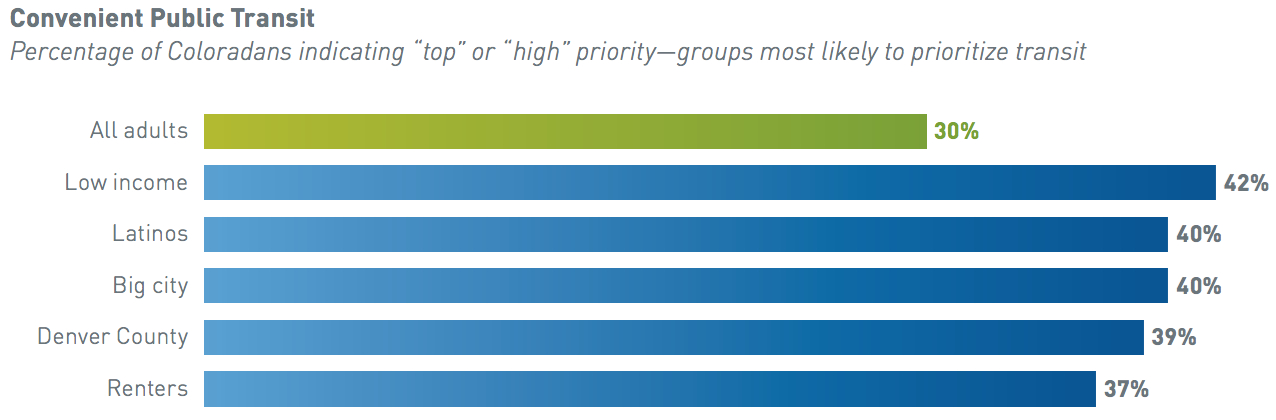
ULI’s findings complement a report released earlier this year by Mile High Connects and WalkDenver, which found that Denver’s low-income residents are most likely to need safe, convenient connections to transit — good sidewalks, crosswalks, bike lanes, and walking routes with calm traffic — but least likely to have them.
Streetsblog has migrated to a new comment system. New commenters can register directly in the comments section of any article. Returning commenters: your previous comments and display name have been preserved, but you'll need to reclaim your account by clicking "Forgot your password?" on the sign-in form, entering your email, and following the verification link to set a new password — this is required because passwords could not be carried over during the migration. For questions, contact tips@streetsblog.org.