Dangerous, Car-Centric Streets Put People at Risk, Not Density
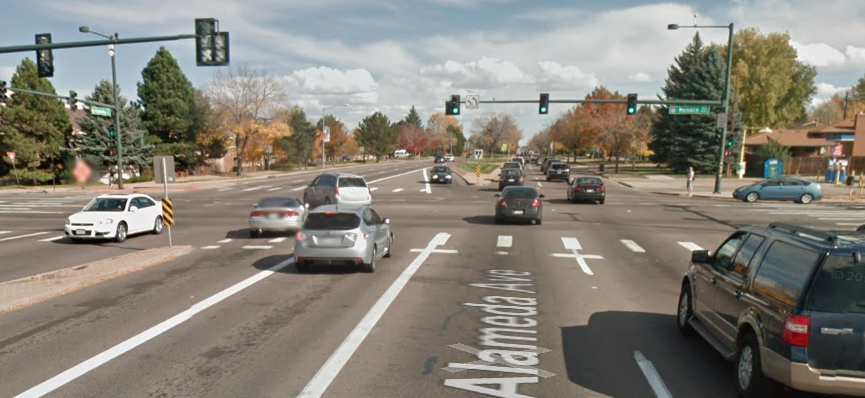
The Denver Post ran a commentary today by Aaron Schwartz, recounting a regular day gone wrong: A car crash injured his son and pregnant wife, who were walking near East Alameda Avenue and South Monaco Parkway. It’s a moving story that should impel change, but the culprit is not, as the headline suggests, “high density.”
Here is Schwartz’s diagnosis:
Denver is one of the most popular cities in the country for young people like us. It’s nice to live in a city that is thriving, but growth in Denver is also putting pressure on neighborhoods like ours. Developers and city officials seem to think that our city must sandwich in high-density buildings everywhere it can. They say the growth has to come first, then solutions to terrible traffic someday will follow.
But density didn’t cause the crash that injured his family. Dangerous street design did. When two wide streets with a total of 15 lanes intersect, high speeds, dangerous turning movements, and pedestrian injuries are the result.
More compact places are, in fact, safer for pedestrians than the single-use, spread-out development that Schwartz wants to preserve.
A 2003 study compared the traffic fatality rates of 280 counties around the nation. Researchers found that the 10 with the most compact, mixed-use development pattern were about four times safer than the 10 most sprawled counties:
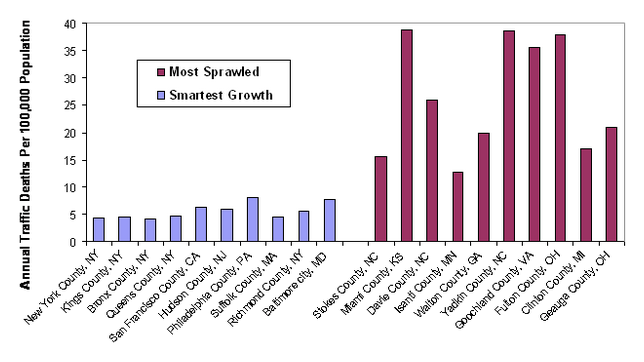
Denser places are safer, but Schwartz is right that density alone isn’t enough. “We desperately need safer, more efficient transportation in this neighborhood,” he wrote. And it’s true that good transit and safe walking and biking connections are essential complements to density.
The answer isn’t to oppose development that puts people in closer proximity to each other and to the things they do every day. It’s to advocate for better, frequent transit service and safer street designs. Denver needs its streets to keep up with its growth.
Streetsblog has migrated to a new comment system. New commenters can register directly in the comments section of any article. Returning commenters: your previous comments and display name have been preserved, but you'll need to reclaim your account by clicking "Forgot your password?" on the sign-in form, entering your email, and following the verification link to set a new password — this is required because passwords could not be carried over during the migration. For questions, contact tips@streetsblog.org.