What’s the Hold-Up With the City’s Bike Safety Study?
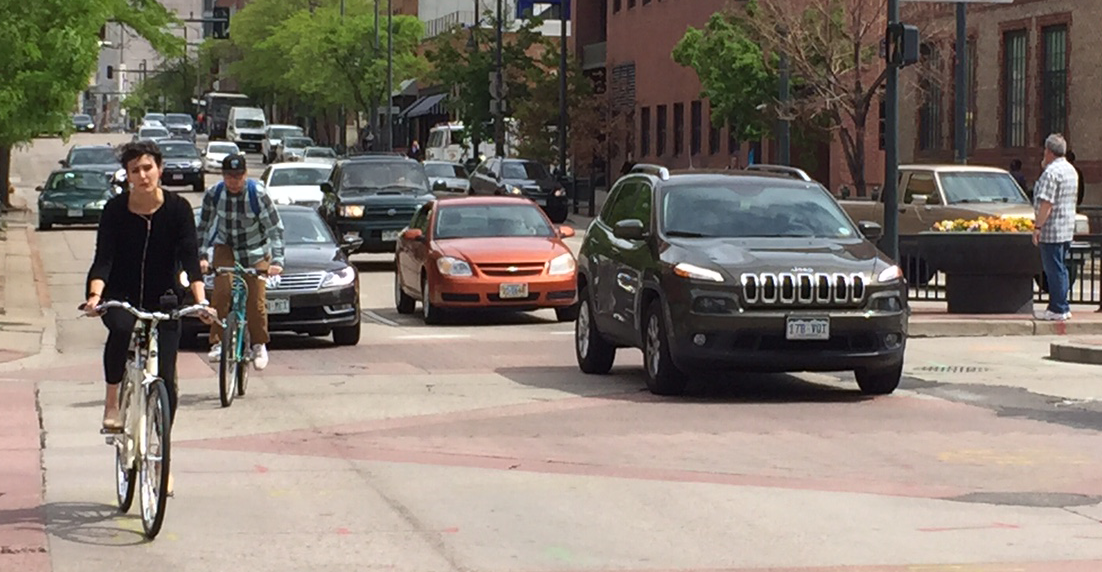
The Department of Public Works has been working on a groundbreaking analysis of cyclist crashes and injuries in Denver that could lay the groundwork for major safety improvements, but the release of the document is now behind schedule.
On March 12, a DPW representative showed an overview of the study to the Inter-Neighborhood Cooperation’s transportation committee. The presentation was stamped with “DRAFT” and only scraped the surface of the full crash analysis, which was supposed to be publicly released in April.
Now it’s mid-May and the report hasn’t been published. What’s the holdup? A DPW spokesperson said only that the study has yet to be completed.
By conducting this analysis, city officials are sending a message that bike safety can be improved if we understand what’s happening on the streets. Knowing where and how drivers strike people on bikes will illuminate how to effectively make improvements to street design.
Some information was in the April presentation. For example, the top contributing factors in Denver bike crashes are:
- Motorists not yielding the right of way and driving carelessly
- Cyclists not yielding the right of way and not stopping at traffic signals/stop signs
A few other nuggets:
- 26 percent of crashes, the most of any type, were broadside (“T-Bone”) collisions
- 42 percent of crashes occur on wide “arterial” streets without a bike lane
- 18 percent occur on sidewalks of arterial streets
- Crashes are concentrated in central Denver
But without the specifics in the whole report, like precisely where crashes are happening, there’s not enough information to guide policy or help advocates.
The study, once released, can become a springboard for action. The sooner the city comes out with the report, the quicker it can get to work saving lives.
Streetsblog has migrated to a new comment system. New commenters can register directly in the comments section of any article. Returning commenters: your previous comments and display name have been preserved, but you'll need to reclaim your account by clicking "Forgot your password?" on the sign-in form, entering your email, and following the verification link to set a new password — this is required because passwords could not be carried over during the migration. For questions, contact tips@streetsblog.org.