Affordable Housing Advocate: CDOT Must Pay for Impact of I-70 Widening
Most DOTs will tell you it’s their job to build roads and highways, plain and simple. Whatever gets in the way of that, well, that’s not their problem.
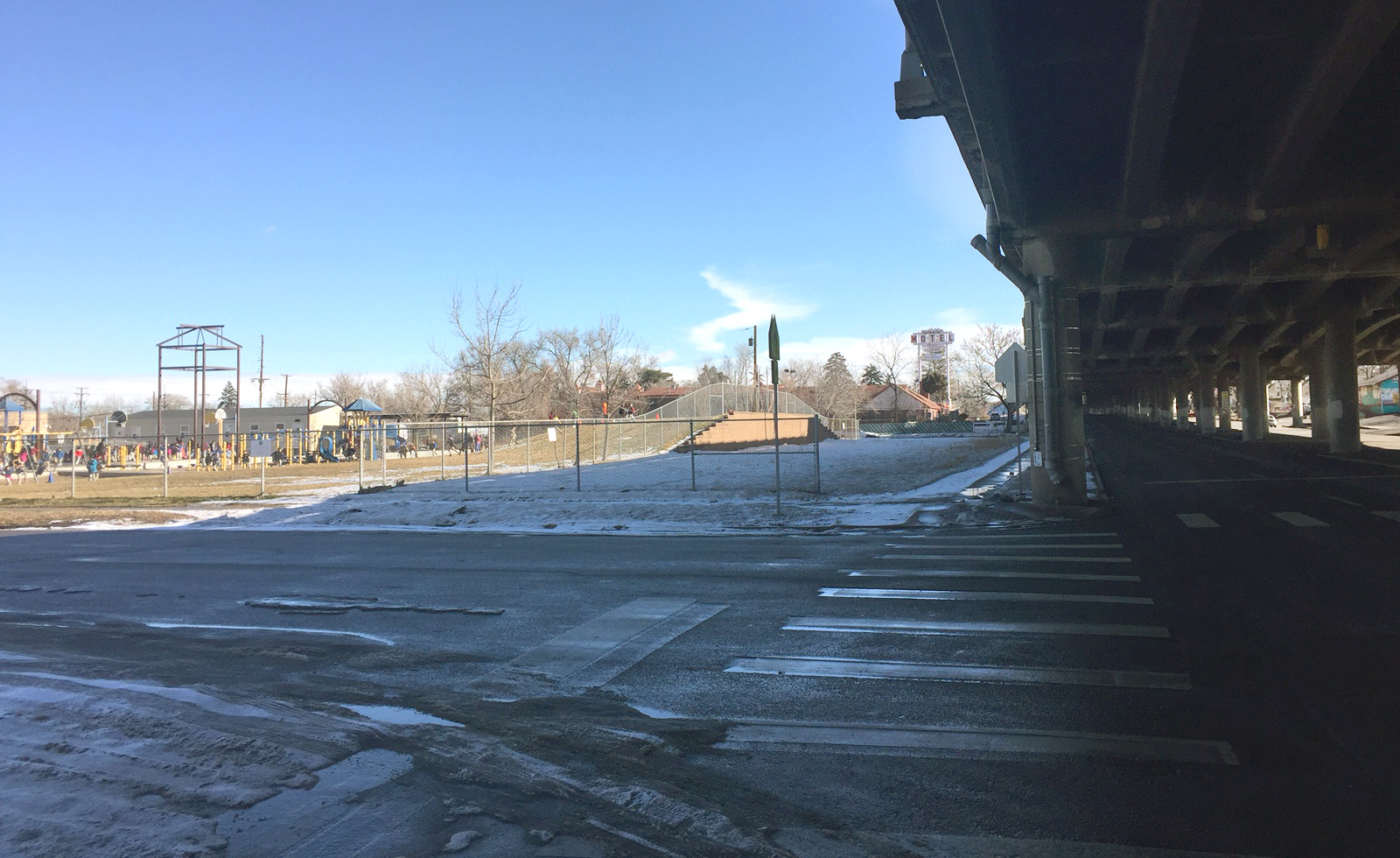
In the case of Colorado DOT’s I-70 expansion, it’s residents of Globeville, Elyria, and Swansea who are in the way. At the project’s onset, CDOT will bulldoze 56 homes and 18 businesses to make room for tons of asphalt and a “cap” with a park on top of the newly sunken freeway.
CDOT sells the cap as a community asset. Problem is, the displaced residents may not benefit from it if it’s built. That’s because CDOT isn’t planning to replace the affordable housing units lost in the low-income neighborhood, says Tony Pickett of the Urban Land Conservancy. His organization aims to help longtime residents maintain some control as neighborhood real estate becomes more valuable.
“Any time you make a significant public infrastructure investment, especially in a particularly underserved neighborhood, you’re going to have to wrestle with how much it impacts people who are already there,” Pickett says. “If you’re spending public funding in a community, it’s your responsibility to deal with the impact of that expenditure in that neighborhood.”
To recoup the number of affordable housing units getting the boot, the Urban Land Conservancy filed a complaint with CDOT and asked the agency to pay for replacing them. CDOT allocated $2 million for affordable housing — even though it’s “not consistent with CDOT’s mission as a state agency” — according to its environmental impact statement.
Problem solved? No, says Pickett, because given the market, it would cost more like $14.5 million to ensure the same people who live in the neighborhood now can live there later.
“While a park on a cap over top of a highway at Swansea Elementary School sounds really good in concept, if families are being displaced from the community who have children that go to that school, the school population is being reduced,” Pickett says. “By the time the park is there, is there really a population for this school that would benefit from being next to the park? You could say, well, new people are going to move in — but that’s the point. What’s gonna be the benefit for people that are there today?”
CDOT wouldn’t be the first state DOT to partner with nonprofits to preserve affordable housing. In Kentucky, the $87 million Newtown Pike Extension threatened a predominantly low-to-moderate-income neighborhood called Davis Bottom. Early on, nonprofits and government agencies created a trust, baked into an official record of decision, that will result in a 25-acre neighborhood with 80 new, affordable homes.
“Not only was the Davis Bottom neighborhood preserved, but community residents are represented in all aspects of decision making, representing one-third of the land trust Board of Directors,” Pickett wrote in a blog post for Rooflines.
Pickett wants CDOT to confer with its counterparts around the country and figure out a way to mitigate the highway’s effects on human lives. He suggested writing a caveat into contracts with highway builders.
“If the department of transportation in Kentucky can figure out a way to fund a community, nonprofit-based entity to improve a neighborhood that they’re impacting, surely that can be done in other locations,” Pickett said.
Streetsblog has migrated to a new comment system. New commenters can register directly in the comments section of any article. Returning commenters: your previous comments and display name have been preserved, but you'll need to reclaim your account by clicking "Forgot your password?" on the sign-in form, entering your email, and following the verification link to set a new password — this is required because passwords could not be carried over during the migration. For questions, contact tips@streetsblog.org.